

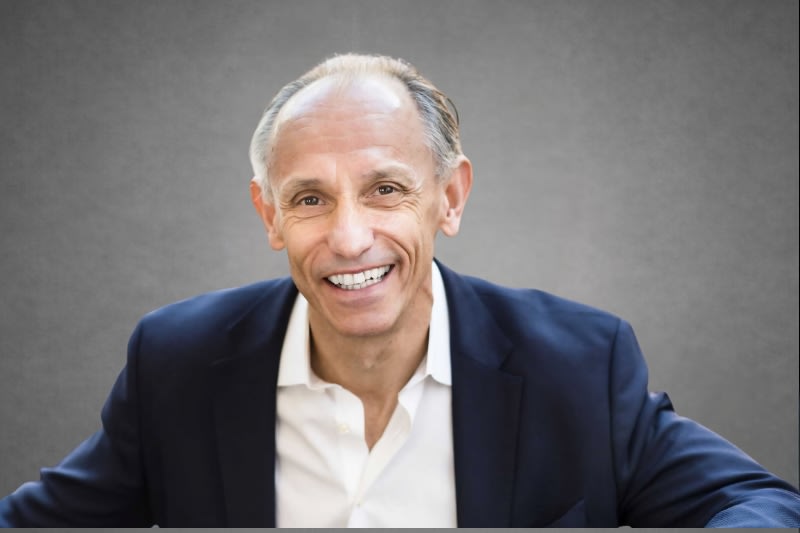
Bill AckmanFounder & CEO
In this interview, Bill Ackman breaks down his disciplined approach to concentrated value investing, explaining how structural market shifts from indexation and quantitative pods create compelling pricing dislocations in durable businesses. He details his high-conviction positions in Big Tech hyperscalers, the strategic evolution from hostile activism to influential shareholder partnerships, and his long-term initiative to build an insurance-powered compounding engine modeled after Berkshire Hathaway.

Founder Stats
- Finance
- Started 2004
- Not Publicly Disclosed/mo
- 50+ team
- New York City, New York, United States
About Bill Ackman
Bill Ackman is the Founder and CEO of Pershing Square Capital Management and Pershing Square Holdings, an investment firm managing over 33 billion USD in assets. He earned his bachelor's degree from Harvard College and an MBA from Harvard Business School. Renowned for concentrated long-term investing and high-profile shareholder advocacy, Ackman has led landmark transformations at major corporations including Chipotle, Canadian Pacific, and Howard Hughes Holdings.
Interview
October 13, 2026
This is interview 2 of 2 with Bill Ackman.
Bill Ackman has been featured on CEO Insider 2 times. Explore the full collection.
How do you evaluate the dual-edged risks of artificial intelligence and the geopolitical stakes surrounding its development?
Artificial intelligence is closely analogous to developing a nuclear weapon in that it holds immense upside for human productivity but carries catastrophic civilizational risks. Because advanced reinforcement learning models are developing rapidly toward superhuman capabilities without humanity fully understanding biological brain architecture, strict monitoring is critical. However, halting domestic development is impractical because adversaries such as China and Russia will continue aggressively. The United States must remain the global leader in AI while instituting strong oversight that does not impair its competitive primacy.
How do you scenario-plan investments when macroeconomic and technological disruptions occur continuously?
Uncertainty is a permanent feature of financial markets, whether driven by pandemics, inflation spikes, financial crises, or technological revolutions. Rather than attempting to trade around short-term macroeconomic noise, our approach is to identify businesses so durable that an investor could comfortably hold them if the stock market were closed for a decade. Companies with wide competitive moats, superior balance sheets, and pricing power consistently survive disruptions and emerge in stronger competitive positions.
How do you respond to critics who argue that Big Tech hyperscalers are degrading their balance sheets with unprecedented AI capital expenditures?
Accelerating capital expenditure by hyperscalers like Microsoft and Amazon represents high-return growth investment rather than balance sheet deterioration. Unlike capex forced by commoditization, these investments are directly responding to overwhelming, structural customer demand for computing power. Because these companies possess fortress cash flows and the ability to price compute services profitably, frontloading infrastructure spending expands their economic moats and produces attractive long-term returns on invested capital.
What is the core investment framework Pershing Square uses to evaluate prospective companies?
We focus entirely on identifying exceptionally durable, predictable, and well-capitalized enterprises with formidable competitive moats. Over decades, we have developed a curated library of businesses we would love to own at the right valuation. Most of the time, elite franchises trade at modest forward returns because the market recognizes their quality. We wait patiently for volatility or temporary misunderstandings to discount these franchises into our strike zone, typically targeting long-term internal rates of return well north of 20 percent.
Why are irrational market dislocations occurring more frequently today than earlier in your career?
Two structural market shifts drive this heightened volatility. First, the massive growth of passive index funds has effectively shrunk active trading float, amplifying the price impact of marginal buyers and sellers. Second, the dominance of leveraged multi-manager quantitative platforms and short-term hedge funds creates violent swings whenever quarterly corporate earnings deviate slightly from consensus. These structural dynamics frequently hand patient, permanent-capital investors the chance to purchase world-class companies at deep discounts.
Why does Pershing Square favor heavy portfolio concentration over broad diversification?
Broad diversification makes sense when an investor lacks granular insight into specific businesses, but for experienced investors, it dilutes capital away from best ideas. Unlike parenting, where you do not rank your children, investing requires rank-ordering risk and expected return. Holding beyond a dozen or fifteen positions yields negligible diversification benefits while penalizing overall returns. Concentration allows us to allocate capital heavily into our highest-conviction holdings.
How has your approach to shareholder activism evolved over the past decade?
In our earlier days, we had to publish exhaustive public presentations and occasionally wage proxy contests because corporate boards and management teams refused to engage with a smaller firm. Today, Pershing Square's track record and credibility allow us to operate as an influential, collaborative shareholder. Corporate executives frequently welcome our perspective as an outside owner with industry-wide context. We prefer taking meaningful minority stakes in outstanding businesses with proven management teams over undertaking disruptive operational turnarounds.
What key lesson led you to avoid activist campaigns in controlled corporate structures?
Investing in controlled companies where operational change is desperately needed almost always yields poor outcomes. A controlling shareholder represents an insurmountable obstacle to reform. If that owner holds divergent economic interests, an entrenched emotional perspective, or an insular agenda, outside investors cannot compel necessary governance changes regardless of analytical rigor.
How has your underlying investment philosophy matured over your thirty-four-year career?
Early in my career, I focused on buying statistical bargains where a dollar was trading for 50 cents, selling once the gap closed. That approach required continuously redeploying capital into new ideas. Over time, I recognized that owning durable, high-quality businesses whose intrinsic value compounds from a dollar to 1.30, 1.60, and beyond is far more profitable. In a world shaped by disruptive forces like AI, business quality and enduring moats are paramount.
What makes the current valuation of Pershing Square Holdings attractive to long-term investors?
Pershing Square Holdings offers a compelling double discount. The vehicle trades at an approximate 33 percent discount to the net asset value of its underlying public liquid equity portfolio. Furthermore, the underlying portfolio companies themselves trade at significant discounts to our appraisal of intrinsic value and compound at attractive rates. Supported by low-cost long-term debt financing, this structure provides a wide margin of safety and powerful compounding mechanics.
How does Howard Hughes Holdings reflect Warren Buffett's playbook at Berkshire Hathaway?
Howard Hughes mirrors Berkshire Hathaway's early transition from a self-liquidating operating asset into an enduring insurance conglomerate. Howard Hughes monetizes its extensive real estate and land assets over time, generating steady excess cash flows. We are redeploying those proceeds into acquiring and expanding Vantage Holdings, a property and casualty insurer led by top-tier industry executives. Combining underwriting profitability on the liability side with superior common-stock asset management creates a powerful compounding flywheel.
What was your original personal thesis on allocating global resources?
As a young entrepreneur in my twenties, I shared an ambition with my father to allocate as much of the world's capital as possible through superior investment performance and subsequently reallocate those resources toward philanthropic and societal initiatives that produce the highest human return. Pershing Square was the operational vehicle to generate that capital base, and our foundation work represents the execution of the reallocation mission.
What personal circumstances prompted the launch of the Ackman-Oxman Institute for Brain Research?
A little over seven months ago, my twenty-six-year-old daughter Lucy suffered a severe brain hemorrhage and remained in a prolonged coma following emergency decompressive surgery. Confronting that crisis exposed how little medical science understands about neurological recovery and traumatic brain injuries. We acquired a vacant, premier life sciences facility to establish the Ackman-Oxman Institute, assembling top global neuroscientists to pioneer clinical therapies that restore cognitive, speech, and motor function.
How does the Ackman-Oxman Institute differ from conventional academic research laboratories?
Most traditional academic research centers measure progress through academic papers and basic science publications rather than clinical patient outcomes. We established the institute with commercial discipline, minimal administrative bureaucracy, and an explicit mandate to deliver actionable treatments rapidly. By seeding commercial biotechnology ventures around breakthrough molecules, devices, and therapies, the institute creates a self-funding economic model where commercial royalties are reinvested into continuous research.
What critical lesson did your early investment in Alexander's Department Stores teach you about position sizing?
Buying Alexander's Department Stores out of bankruptcy at roughly 8 dollars per share represented 35 to 40 percent of my personal net worth at the time. The stock quickly rebounded to 21 dollars, and I sold for a quick profit. Years later, that stock compounded past 600 dollars per share because of the immense underlying value of its retail real estate. That experience taught me early on that identifying great assets is only half the battle; capturing their true compounding potential requires the patience not to sell prematurely.
Table Of Questions
Video Interviews with Bill Ackman
Bill Ackman on AI as a ‘Nuclear Weapon’, and Why Big Tech Still Looks Cheap
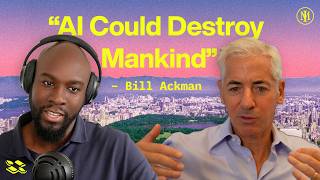
Bill Ackman on AI as a ‘Nuclear Weapon’, and Why Big Tech Still Looks Cheap
Forbes: Billionaire Investor Bill Ackman Shares His Blueprint For The Next Decade of Wealth
The All-In Podcast: Bill Ackman: Here's What the Market is MISSING
Cite This Interview
Use this interview in your research, article, or academic work
Related Interviews

Jason Cozens
Founder & CEO at Glint Pay
In this interview, Jason Cozens, founder and CEO of Glint Pay, joins Andy Schectman on Little by Little to discuss the resurgence of physical gold…

Tom Sosnoff
Co-founder & CEO at Lossdog
In this interview, Tom Sosnoff, co-founder of thinkorswim, tastytrade, and Lossdog, sits down with Will Stern in his Chicago studio to discuss forty-five years of…

Kevin Paffrath
Founder & CEO at Meet Kevin (Reinvest)
In this interview, Kevin Paffrath — financial analyst and creator behind the Meet Kevin brand — breaks down Alex Karp's controversial claim that OpenAI and…

Paul Graham
Co-Founder at Y Combinator
In this interview, Y Combinator co-founder Paul Graham reflects on twenty-one years of startup acceleration and forty-seven YC batches. Graham explores the nature of founder…
Sir Paul Marshall
Co-Founder, Chairman & CIO at Marshall Wace
In this interview, Marshall Wace co-founder and chairman Sir Paul Marshall discusses running a ninety billion USD alternative asset management firm. Marshall explains the synergy…
Nigel Morris
Co-founder & Managing Partner at QED Investors
In this interview, QED Investors co-founder and Managing Partner Nigel Morris outlines the frameworks that built Capital One and QED Investors. Morris shares insights on…