
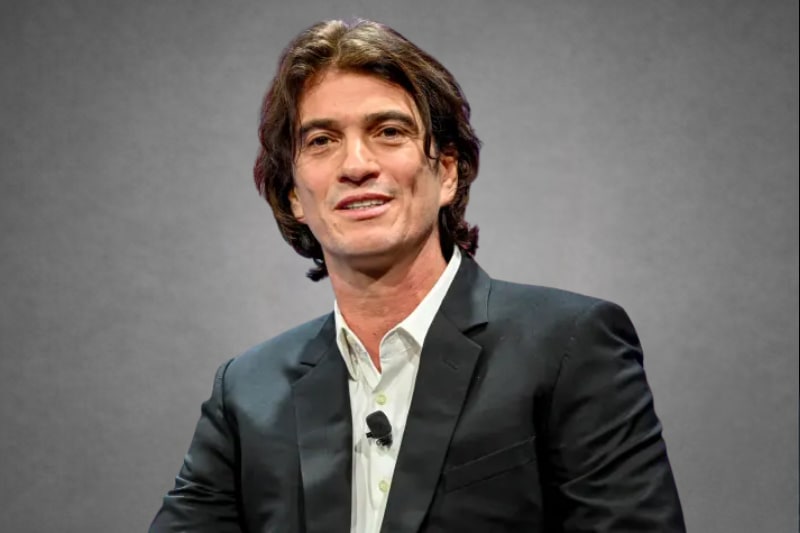
Adam NeumannFounder & CEO
In this interview, Adam Neumann, co-founder of WeWork and founder of Flow, sits down with Steven Bartlett for his most candid conversation to date. He opens up about a turbulent childhood under a bipolar mother, early sexual abuse, and the crisis of ego that brought one of the fastest-growing companies in history to its knees. He shares the real story behind the WeWork collapse, the 4.2 billion USD SoftBank deal signed in the back of a cab, and why falling is not the tragedy but how you get up is.
Founder Stats
- Marketplace
- Started 2021
- Not Publicly Disclosed/mo
- 460+ team
- Miami, Florida, USA
About Adam Neumann
Adam Neumann is the founder and CEO of Flow, a tech-enabled residential real estate company headquartered in Miami, Florida, and backed by Andreessen Horowitz with 450 million USD in total funding. Born in Israel, Neumann is best known as the co-founder of WeWork, which he built from a single Brooklyn coworking space into a global empire of 12,000 employees before a failed IPO and boardroom dispute led to his departure in 2019. Since then, he has rebuilt, investing 350 million USD of personal capital into Flow alongside his a16z partnership, pursuing what he describes as a mission to create communities where people make a life, not just a living.
Interview
October 01, 2026
You are unlike most founders who come on this show. Before we get into business, I want to understand the anomalous origin story that shaped who you are. Where does Adam Neumann begin?
For me, when I get to know someone and they ask where it is coming from, I usually start the same way. First of all, I am a husband. That is my first job and what I am most proud of. Then I am a father of six. Then I am a friend. And after that I am an entrepreneur. I think each one of us has a phenomenal soul that is perfect. And what really defines a person is the gap between where they are and where their potential is. For me, throughout my life, sometimes out of my control and sometimes with my control, I have always been striving to close that gap.
Your early context was quite unstable. Your mother suffered from bipolar disorder. Can you bring me into what that world was like for you?
My parents were both doctors and we were never sick no matter how sick we were. My mom was an oncologist and she would say her patients are sicker. When I was in second grade my parents divorced and we moved to the United States. There was no one around. It was only my mom and my sister and I. And all day she would work with patients and at night at 8 p.m. she would come home and all hell would break loose. She would tell us we had to wash the dishes and every night ended with some version of throwing them on the floor and then crying and cleaning. For two years my sister and I thought the whole experience was crazy until one day she bought a nice set of dishes. When she came home to throw them we noticed she was only throwing the cheap ones. She was not throwing the ones she liked. That gave us a hint that maybe there is more control over what is happening than it appears.
You mentioned there are things you have experienced that you have rarely shared publicly. You said some of these are the ones we do not like to talk about. Are you willing to go there?
I will share two. When someone is bipolar they get very angry or very happy very fast. My mom at her happiest was the most amazing person. But when it was not good there were suicide threats. When you are two children and your only parent threatens to commit suicide the fear is total because who is going to take care of you? I remember one specific moment on the kibbutz. My mom gets into a big fight and she takes a knife. She says she is going to kill herself. And I just remember feeling that I have to stop it, that it is up to me. So I grabbed the knife and we are fighting and my sister is sitting right there crying. I was twelve years old. That is one. Between second and fourth grade I was sexually molested by someone at least six or seven years older than me. I did not even know what was happening was wrong. Many years later Rebecca explained to me what it actually was. And that taught me a lot about children and about how much we owe them in terms of protection and understanding. Before you judge anyone, you do not know where they started. You only know where you see them now.
How did you survive those years psychologically and what did comedy or humor or some inner mechanism give you?
I probably went to sleep crying every single night until I was 14 or 15. My sister told me later that I used to say to her that one day I will become very successful and I will take care of us. I do not even remember saying that. But I think that was how I interpreted control. How I was going to fix everything. I did not have a healthy coping mechanism until I met Rebecca. She introduced me to a spiritual practice and for the first time I had a framework that made sense of what had happened to me.
Rebecca apparently told you after one week of dating that you were not the guy for her. What happened in that conversation?
I was very surprised. My sister was a supermodel and we were in New York and I thought a lot of myself. She said I did not have a spiritual backbone. I was focused on material things. She said the man she was interested in would want true happiness and true fulfillment, not material things. It was so different from anything anyone had ever said to me that instead of running away I asked how someone comes to explore that spiritual life. She said you need a practice. Mine started with Kabbalah but for all of us it can be different. I proposed three months after we met.
You co-founded Green Desk in 2008 and sold it, which led directly to the founding of WeWork. Walk me through how that first business happened.
Miguel and I were in the same building. I had a baby clothing company. The landlord kept telling me my business sucked and I told him his real estate sucked because it was all empty. One day he takes me upstairs and asks what I would do with it. I said divide the floor into 15 small spaces, charge one thousand each, put a receptionist. He calls me the next day and says take the whole building. We put five ads on Craigslist and launched Green Desk. It was 92 percent full within a week and cash flow positive within a month. That was new for me. I had never had a business that was cash flow positive. From that we drew the original WeWork sketch on the wall and the vision was never about desks and chairs. It was always a full lifestyle circle. Travel, health, social life, co-workers, life essentials. Create a world where people make a life and not just a living.
You met Masayoshi Son of SoftBank in circumstances that could not have been more compressed. What actually happened in that 12-minute meeting?
His team kept reducing the time. 90 minutes became 75, became 60, became half an hour, became 12 minutes because he had a meeting with President-elect Trump that day. I took a deep breath and decided to make it the best 12 minutes we could. He walks in, smells the air and says this smells like dreams. This is not an office space. It is a factory of dreams. I said that is one step above my language. He out-Adams'd Adam. He said let's go to the car and talk. In the car he asks me my valuation and how much I am raising. I said his team told me not to discuss it. He said I am the boss. I said we were raising three to four hundred million at 16 billion. He said that is not enough to build a global company. By the end of a 16-minute car ride we had agreed on 4.2 billion. He takes an iPad, writes it all down, signs his name and hands me the pen. I signed. He walked out. I stood on 54th Street unable to believe what had just happened. And then I started walking downtown.
You described that walk back to WeWork HQ as the moment everything started to go wrong. What happened on that walk?
Every step I took the ego started coming up. 20 billion valuation. Another billion in Japan, another billion and a half in Southeast Asia, five billion in China. And a billion of that 4.2 was going to investors and employees and proportionately to me. I owned about 25 percent. You start doing the math. The guy who got into that car was a mission-driven entrepreneur who believed in creating a world where people make a life and not just a living. By the time I walked into HQ I forgot what we were all about. It suddenly became about the money. And in a high-growth business where you are making 100 decisions a day and 98 of them need to be correct, suddenly you are blinded. We were a company led from the top. The moment I lost it, everybody lost it. And that was the beginning of the end.
You have said that the real story of what happened to WeWork has not been fully told. What is the piece of it that most people do not understand?
In March 2018, before the IPO, before any of the public chaos, Masa offered to buy the company for 20 billion in cash. Ten billion to the investors, ten billion on the balance sheet for us to build together. I would keep a 30 percent stake that would grow to 51 percent when we hit goals. The deal was extraordinary. Every investor was going to make money many times over their investment. But two board members from Benchmark created a special committee and negotiated that 20 billion deal from March all the way to December while the company was losing two billion a year. They thought they could push it to 32 billion. By December Masa could no longer do a 20 billion all-cash deal because SoftBank's stock was down. That delay cost everyone everything. We then found ourselves forced to go public when we were not ready. That is what actually happened.
People sometimes think you were fired as CEO. What is the truth of how you left?
I had full control over the board and the votes. I had to choose to step down. People sometimes think I was fired because the Wall Street Journal said so. Not true. I stepped down because I was told by one of the heads of two of the biggest banks in the world that if I stepped down they would fund two billion into WeWork and take care of my personal debt of 460 million. I thought it was the best choice for the company, for the employees, for Masa, for everyone. I stepped down to become executive chairman, not to disappear. And nine minutes later a legal letter arrived from the bank saying because of change of control I had 15 days to repay my debt or they would take my shares. Which because of my super voting rights would have given them control of the company. That was not a coincidence. If you are going to stab the king, kill. If you are not going to kill, I am going to come back.
You woke up in the middle of the night crying next to Rebecca. What happened in that moment?
First time she had ever seen me cry. I said we lost everything. She asked about the cars. I said the wheels on the cars. She asked about the hundred million we had said we would put aside in her name just in case. I told her I had never done it. She asked about the personal guarantee we had agreed I would never sign. I told her I had signed it. Most partners would have crumbled in that moment. She looked at me and said when I met you you were broke and I think you are much more sexy when you are broke. Then I smiled. She also said we can go live with her mom in upstate New York and if I want to go back into business she knows I will be successful, and if I do not we will move to Costa Rica and surf every morning and every night. At that moment I think I grew up for the first time.
How did you recover your belief in your darkest professional moment and what carried you through?
My spiritual teacher called me five days into the public collapse. He said I called you to make sure you remember the two things we learned for eight years. I said we learned endless things. He said no, two things. One: love thy neighbor as yourself, and the rest is commentary. To love yourself you have to acknowledge not just your strengths but your weaknesses and your failures. And the only way you can love yourself through all of that is if you are able to forgive yourself. The second thing he reminded me: the darkest moment of the night is a second before dawn. Belief is not measured when everything is going up and everyone wants to be your investor. Belief is measured when it is all crashing and even your friends are questioning you. The next morning I walked down to my three employees and I was smiling. They thought I had lost my mind. I told them I believe and I don't know how and I don't know why but this is all going to work out and we are ready to go.
What is the biggest mistake you personally made at WeWork and what lesson does it carry?
In WeWork the business grew faster than I could grow. That is where everything went wrong. Whenever a company grows faster than its founder one of two things will occur. Either it will crash or if somehow the founder holds it together they are not fulfilled and if they are not fulfilled why do it? My specific mistake was losing myself in the moment after the SoftBank deal. I forgot the mission. I became blinded by the valuation. And in a top-led company the moment the founder loses it everybody loses it. The lesson is you cannot grow a business faster than you can grow as a human being. Know yourself first. Then go fast.
You talk about choosing your investors as carefully as you choose your life partner. What should founders actually look for?
Choose them for how they will treat you on your worst day, not your best. If they have a history of removing founders, Travis Kalanick from Uber, Jack Dorsey from Square and Twitter, and many more, that is a pattern. Park them. Look for the ones who play multi-dimensional chess as founders, not the ones who watch the game and then tell you afterward what you should have done. A16Z asked me every board meeting what I can do better and then came prepared with notes. That is the right kind of partner. The wrong investor will optimize for their return at the exact moment you need them to optimize for the mission.
What role did Rebecca's stand during the SoftBank settlement negotiations play in how it ended?
SoftBank had agreed to pay three billion as a cash out to all investors and to us as settlement. Then they sent a force majeure letter in March 2020 during the pandemic and did not pay it. We went into litigation and eventually negotiated a settlement of a billion and a half. When I came to tell Rebecca the settlement she said no. She said they were supposed to pay April 1st 2020. They did not. Now you are signing another agreement to delay payment again. What if they do not pay and you have already missed your court date? Either they pay or they do not. She said to tell them that either the money is in the bank before I give birth on Friday morning at 8 a.m. or we will see them in court on Monday. Marcelo Claure from SoftBank called. He said the money will be in the bank before you give birth. At 4:30 in the morning the money hit the account. At 8 a.m. Rebecca was in the hospital giving birth to Moses.
You are now building Flow. Why come back after everything you went through?
Because I now realize that in WeWork I did a lot more things right than wrong. Not 10 percent more. 95 percent more. The mission was right. The model worked. The four-wall economics worked. The mistake was that we were signing leases instead of management deals and growing faster than our technology could measure. Flow is solving exactly those things. We have the technology to tell you which square foot of which floor of which building is profitable in real time. And the mission is exactly the same. Create communities where people make a life and not just a living. The world is lonely and disconnected. People need community. We were five years ahead of our time. Now we are exactly on time.
How do you define success today compared to how you would have defined it at 21 or even at 31 when you drew the WeWork sketch?
At 16 I wanted to be a millionaire. At 21 I wanted to be a billionaire. I thought money was going to fill the hole from my childhood. Then I did three businesses that did not succeed until I met Rebecca and she said you are chasing money and chasing money is like chasing cool. Even if you get it it will not make you happy. Today my definition of success is what happens in the last minute before you leave this world. The ego goes away completely. No more secrets. And what is left is the love that surrounds you. Your children, your grandchildren, your friends, all the love you cultivated for your entire life. That is the definition. Not a number. Not a valuation. Love.
What is the single most powerful practice you have found for knowing yourself and clearing the noise?
About ten years ago I started keeping what I call a technology Shabbat. Every Friday we disconnect from all technology for 25 hours. No phone, no computer, no screen of any kind. What I have found is that from the first two hours where your hand keeps going to your pocket out of addiction, to hour 22 and 23 where you feel completely amazing, and then you take the phone back and within 10 minutes you drop back down. The contrast shows you everything. But also in those 25 hours the best ideas come. Who you should be surrounded with. What business you should focus on. What is your next move. Not because you are trying to think but because you finally stop. I would tell any founder that before you listen to your customers or your investors, take 24 hours away from your phone and find out who you are first. When you find that you find your calling and when you find your calling everything works.
Table Of Questions
Video Interviews with Adam Neumann
WeWork Founder: His $47 Billion Empire Collapsed! | Adam Neumann
WeWork Founder: His $47 Billion Empire Collapsed! | Adam Neumann
Cite This Interview
Use this interview in your research, article, or academic work
Related Interviews

Ritesh Agarwal
Founder & Group CEO at OYO
In this interview, Ritesh Agarwal discusses why global tourism is entering a new growth era driven by AI, rising prosperity, and increased travel demand. He…
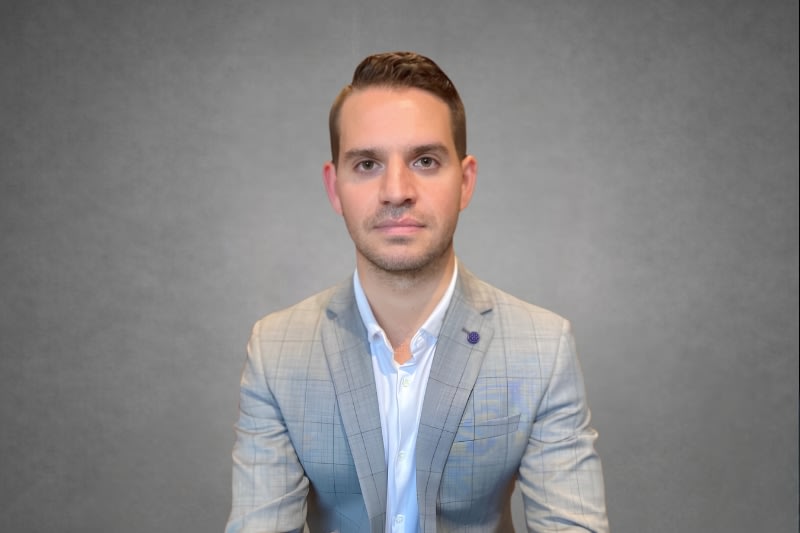
Brandon Bonifacio
Founder & CEO at NevGold Corp
In this interview, NevGold founder and CEO Brandon Bonifacio explains how the company is positioning itself to become a leading domestic antimony producer in the…

Sheila Huff
CEO at Huff's Towing & Recovery
In this interview, Sheila Huff shares the challenge of leading a third-generation family business through a difficult transition after losing a longtime general manager. She…

Gabe Karp
Co-Founder at VryfID
In this interview, VryfID co-founders Gabe and Aiden Karp discuss a recent antisemitic incident that emerged during their internship hiring process. They share how the…
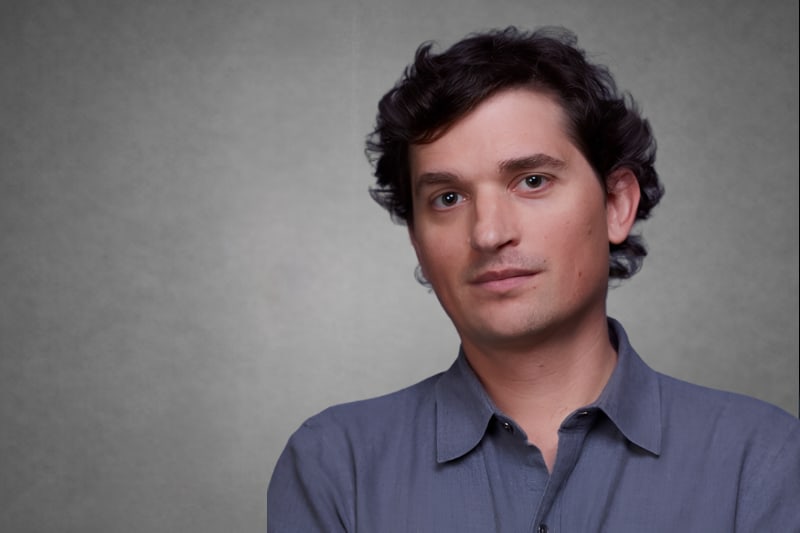
Dalton Caldwell
Managing Partner at Y Combinator
In this conversation, Y Combinator Managing Partner Dalton Caldwell discusses the myth of getting rich quickly through startups. He explains why most successful founders spend…

Jensen Huang
Co-founder & CEO at NVIDIA
In this interview, Jensen Huang, co-founder and CEO of NVIDIA, sits down with Anderson Cooper to address the most urgent questions surrounding AI safety, autonomous…