

Ant WilsonCo-founder & CTO
In this interview, Ant Wilson discusses the journey of building Supabase into one of the leading open-source backend platforms for developers. He shares insights on customer obsession, product simplicity, developer-focused marketing, and scaling an open-source business. The conversation highlights the importance of clear messaging, remote-first culture, community-driven growth, and how security, reliability, and performance create lasting competitive advantages in developer infrastructure.
Founder Stats
- Technology, SaaS, AI
- Started 2019
- $500K–$1M/mo
- 50+ team
- Singapore
About Ant Wilson
Ant Wilson is the co-founder and CTO of Supabase, a developer platform that provides database, authentication, storage, and real-time infrastructure built around PostgreSQL. After years of entrepreneurial experimentation, he helped build Supabase into one of the fastest-growing open-source companies in the developer ecosystem. Wilson is known for his customer-first mindset, commitment to open-source principles, and focus on delivering reliable, secure, and high-performance tools that help developers build applications faster.
Interview
October 27, 2025
What early lesson guides how you run the company today?
Can you walk through your career path before Supabase?
How did an early dream like archaeology change your founder mindset?
Describe Supabase for someone non-technical.
How did you meet your co-founder and start building?
What original problem were you solving?
What did rebranding teach you about product and messaging?
What scrappy practice still shapes culture?
How do you market to developers?
How do you balance community requests with your roadmap?
How has open source shaped hiring and execution?
What is your approach to fundraising?
How do you earn trust with larger companies?
How do you build culture in a fully remote team?
How do you stay aligned and ship fast across time zones?
How do you use AI across the company?
What advice would you leave for founders, and how would you start again?
Table Of Questions
Video Interviews with Ant Wilson
First Block: Interview with Ant Wilson, Co-Founder and CTO of Supabase
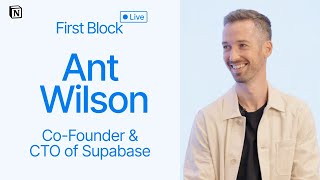
First Block: Interview with Ant Wilson, Co-Founder and CTO of Supabase

Why Supabase keeps growing
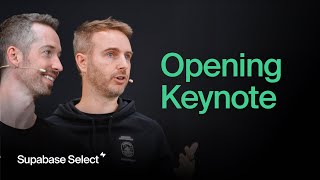
Opening keynote from Paul Copplestone and Ant Wilson | Supabase Select 2025
Cite This Interview
Use this interview in your research, article, or academic work
Related Interviews

Naveen Rao
VP of Generative AI & Former CEO of MosaicML at Databricks
In this interview, Naveen Rao, VP of Generative AI at Databricks and former CEO of MosaicML, analyzes the explosive economics of artificial intelligence inference and…

Rahul Vohra
Founder & CEO at Superhuman
In this interview, Rahul Vohra, Founder and CEO of Superhuman, explores why superficial AI integrations fail to retain software users and outlines frameworks for embedding…

Sam Altman
Co-founder & CEO at OpenAI
In this interview, Sam Altman, Co-Founder and CEO of OpenAI, explores the practical trajectory toward artificial general intelligence and the imperative of human agency in…
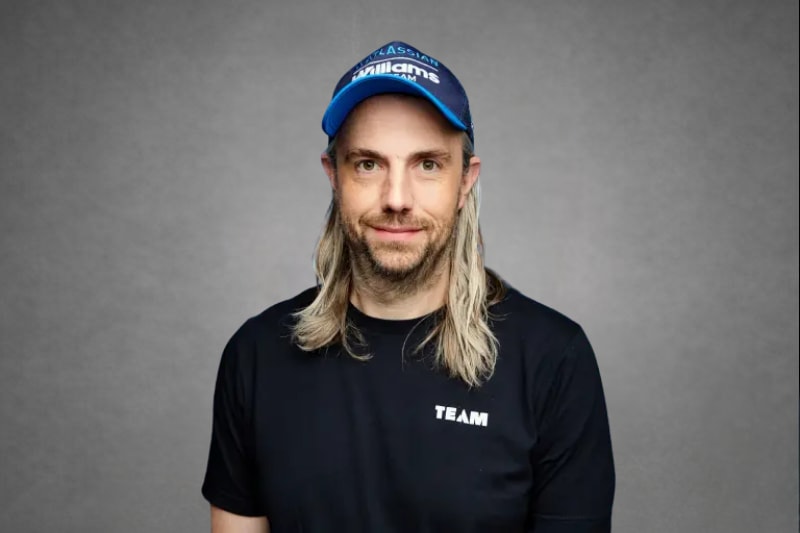
Mike Cannon-Brookes
Co-Founder & CEO at Atlassian
In this interview, Mike Cannon-Brookes, Co-Founder and CEO of Atlassian, discusses the practical integration of autonomous AI agents across modern enterprise collaborative workflows. He examines…

Jensen Huang
Co-founder & CEO at NVIDIA
In this interview, Jensen Huang, Founder, President and CEO of NVIDIA, addresses prevailing existential narratives surrounding artificial intelligence and outlines Europe's sovereign computing opportunities. He…

Aneel Bhusri
Co-Founder & CEO at Workday
In this interview, Aneel Bhusri, Co-Founder and CEO of Workday, unpacks the seismic impact of enterprise AI agents on global corporate labor and organizational architecture.…