
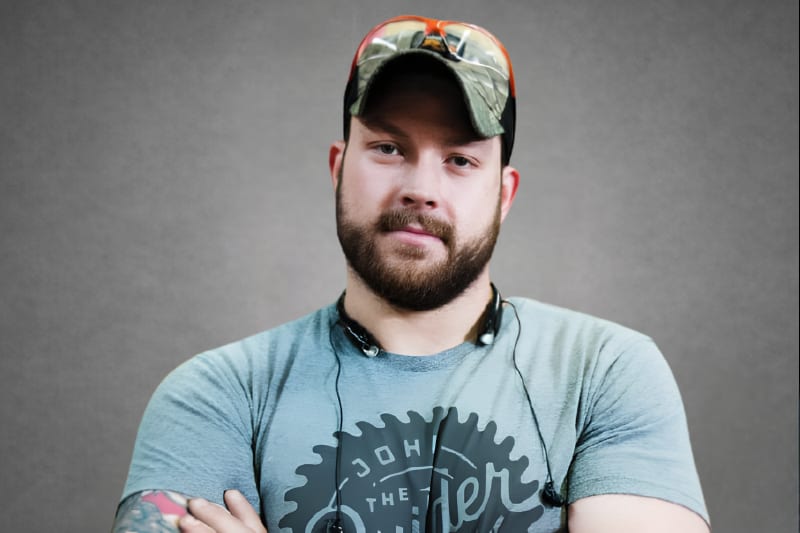
John MaleckiFounder & CEOScaling a Blue-Collar Woodworking Passion into a 1.3 Million USD Media Empire
In this interview, John Malecki, Founder and CEO of John Malecki Media, reveals how he transitioned from playing in the NFL to building a blue-collar digital creator business generating over one million USD annually. He outlines his evolution from building custom furniture to capturing scalable digital leverage, negotiating six-figure brand partnerships, and diversifying his revenue across physical woodworking plans, digital courses, and engaging video storytelling.


Founder Stats
- Creators
- Started 2016
- $108K/mo
- Under 10 employees
- Pittsburgh, Pennsylvania, USA
About John Malecki
John Malecki is the Founder and CEO of John Malecki Media, a prominent blue-collar digital entertainment and DIY woodworking production company based in Pittsburgh, Pennsylvania. A former professional football offensive lineman who spent four seasons in the NFL with the Pittsburgh Steelers, Malecki taught himself carpentry and video editing from scratch. He transformed a rundown basement workshop into a multimedia studio generating over one million USD per year.
Interview
November 26, 2026
This is interview 2 of 2 with John Malecki.
John Malecki has been featured on CEO Insider 2 times. Explore the full collection.
How did you transition from playing in the National Football League to building a woodworking business?
Growing up in a blue-collar Italian family in Pittsburgh, my relatives worked in construction and industrial trades. While playing offensive line for the Pittsburgh Steelers, I needed a constructive hobby to keep my mind balanced during the off-season. I started woodworking with basic tools in my garage. When my football career concluded after four years, I channeled my athletic work ethic directly into building custom furniture full-time.
What was the earliest project you ever built that generated an actual financial transaction?
A high school teammate wife saw photos of my early garage experiments on social media and asked if I could build a pair of outdoor Adirondack chairs. I had never built chairs before and lacked half the necessary tools, but I found a paper plan in a magazine and figured it out. She paid me around one hundred dollars. That modest payment proved that people valued handcrafted custom furniture.
What motivated you to start filming your workshop projects and publishing them to YouTube?
Initially, my goal was purely to gain local client awareness and obtain free professional tools. I watched established makers on YouTube receive free equipment from power tool brands, and I wanted those same perks. I bought an inexpensive beginner camera at a discount warehouse, set up a tripod in my shop, and filmed my furniture builds so paying clients could follow along with their commissioned projects online.
How challenging was the initial period when you were grinding without meaningful digital traction?
It was brutally exhausting. I was working twenty-hour days in a freezing basement shop, sleeping on a friend couch, and struggling to cover basic rent. I was trying to master three entirely separate disciplines simultaneously: fine furniture fabrication, professional video cinematography, and small business operations. Most people quit because mastering multiple complex skills takes years of unglamorous persistence before digital compounding creates financial returns.
When did you realize that digital media offered vastly more leverage than traditional carpentry?
When you build a physical dining table, that single transaction ends the moment you deliver the furniture. It never makes you another penny. Conversely, an engaging video documenting how you solved an intricate woodworking challenge continues generating advertising revenue, sponsorship interest, and digital plan sales for five years. Media content decouples your income from your physical hourly labor, providing true scalable business leverage.
How did landing your first six-figure sponsorship contract reshape your business strategy?
Early in my creator journey, several major tool brands reached out simultaneously and offered yearly integration contracts totaling one hundred thousand dollars. Earning six figures from media sponsorship was vastly more profitable and scalable than building custom credenzas for individual clients. That breakthrough proved that authentic trade storytelling was valuable to global brands, prompting me to pivot from bespoke furniture commissions to professional digital media production.
How did the pandemic lockdowns accelerate your company growth and publishing frequency?
When emergency health orders shuttered physical workshops, our production team refused to pause operations. Millions of people were stuck at home searching for engaging home improvement ideas and entertaining hands-on projects. We doubled down on consistent publishing, improved our production quality, and created dynamic challenge formats. Our audience expanded exponentially because viewers appreciated our candid, humorous approach to solving authentic workshop problems.
How do you structure revenue diversification across your modern creator enterprise?
Relying entirely on YouTube advertising revenue is precarious because platform algorithms fluctuate unpredictably. We built a resilient multi-stream business model that combines brand sponsorships, digital woodworking plans, merchandise, educational trade courses, and retail affiliate partnerships. Diversifying across digital and physical products guarantees stable monthly cash flow, enabling us to invest continuously in high-end workshop tools, video editing talent, and expansive studio space.
What production philosophy sets your blue-collar content apart from traditional polished DIY videos?
Audiences are exhausted by sanitized, overly rehearsed instructional tutorials where everything proceeds flawlessly. We embrace the chaotic reality of workshop life. When a board splits, a measurement fails, or a project goes completely sideways, we showcase the entire struggle and our real-time problem-solving process. Authenticity builds immense audience trust because viewers relate far more to honest resilience than to staged perfection.
How do you manage the operational complexity of running a high-output production shop?
Running a modern creator business requires treating video production like an industrial assembly line. We maintain a full-time team of five specialists handling fabrication, multi-camera videography, audio engineering, and post-production editing. By delegating video editing and physical shop preparation to talented teammates, I can focus entirely on creative concept development, brand relationships, and high-level enterprise growth initiatives.
What lessons from professional sports do you apply to leading your creative media team?
The NFL taught me that talent alone never guarantees victory. Elite performance requires relentless daily preparation, accountable teamwork, and the ability to absorb painful setbacks without losing enthusiasm. When a video underperforms or a brand deal falls through, we review the footage like game film, identify our mistakes, and execute better on the next play. Athletic discipline translates perfectly into business leadership.
What advice would you give to blue-collar tradespeople looking to build an online brand today?
Do not wait until you own premium studio cameras or perfect lighting equipment to start sharing your expertise. Pick up your smartphone, capture the authentic daily work happening on your job site, and explain your craft clearly. Millions of people admire practical trade skills and hunger for genuine knowledge. If you demonstrate consistent honesty and work ethic, commercial opportunities will naturally follow.
Table Of Questions
Video Interviews with John Malecki
Behind The Scenes of a 1M USD Woodworking Media Empire - John Malecki

Behind The Scenes of a 1M USD Woodworking Media Empire - John Malecki

How We Built a Multi-Million Dollar Blue-Collar Creator Business - Maker Media
Cite This Interview
Use this interview in your research, article, or academic work
Related Interviews

Drew Desbordes
Founder & CEO at 4Lifers Entertainment
In this interview, comedian and content creator Druski opens up about growing up in a volatile household in Gwinnett County, Georgia, how he used humor…

Rick Rubin
Co-Founder & Music Producer at American Recordings
In this interview, legendary music producer and author Rick Rubin shares his philosophy on creativity, artistic fearlessness, and what it truly means to make great…

John Endresa
CEO at South African Institute of Race Relations
In this interview, John Endres of the Institute of Race Relations discusses South Africa's future through the lens of data, policy, and public opinion. He…
Christopher Long
Founder & CEO at Longyards
Building a High-Margin Industrial Outdoor Storage Business Renting Fenced Dirt
In this interview, Christopher Long, Founder and CEO of Longyards, reveals how he pioneered an industrial outdoor storage business renting fenced land to commercial contractors.…

Kush Bavaria
Co-Founder & CEO at Ornn
Building GPU Compute Futures and Navigating the AI Neo-Cloud Economy
In this interview, Kush Bavaria, Co-Founder and CEO of Ornn, unpacks the financial mechanics of modern artificial intelligence infrastructure, neo-cloud economics, and GPU compute derivatives.…

Jacob Wright
Founder & CEO at Dabble
Achieving Four Percent Churn in B2C SaaS Through Thoughtful Product Design
In this interview, Jacob Wright, Founder and CEO of Dabble, reveals how he designed a fiction writing application that achieved an extraordinary four percent monthly…