

Rick RubinCo-Founder & Music Producer
In this interview, legendary music producer and author Rick Rubin shares his philosophy on creativity, artistic fearlessness, and what it truly means to make great work. He explains why indefensible acts are often the most meaningful ones, how transcendental meditation unlocks access to a deeper creative intelligence, and why AI cannot replace the artist's point of view. Drawing from decades working with Jay-Z, Kanye West, Adele, Johnny Cash, and many others, Rubin reveals the principles that make creativity a way of life, not just a profession.
Founder Stats
- Creators
- Started 1993
- Not Publicly Disclosed/mo
- Not Publicly Disclosed team
- Malibu, California, USA
About Rick Rubin
Rick Rubin is a legendary music producer, author, and co-founder of Def Jam Recordings, which he launched in his New York University dorm room at age 21 in 1984. He later founded American Recordings in 1993. Over four decades, he has produced transformative records for Jay-Z, Kanye West, Johnny Cash, Adele, Red Hot Chili Peppers, Tom Petty, Eminem, System of a Down, Linkin Park, and many others. In 2023 he published The Creative Act: A Way of Being, which became one of the most celebrated books on creativity and philosophy in recent memory. He also recently directed JAY-Z IN 8, an eight-part documentary series released on HBO in September 2026.
Interview
September 22, 2026
How do you describe what you do professionally?
I would say I am involved in art and creativity. It might come up as a coach, as a collaborator, in a film project, or talking to someone at a startup who wants to find creative solutions to a problem. Any problem we face usually has a creative path around it that most people overlook because they assume the accepted version of how to move forward is the only way.
What is your highest-level creative principle?
A word I have been thinking about lately is indefensible. In making art, indefensible is actually a good thing. Maybe not just a good thing but a necessary thing. You take things to an extreme that you cannot defend rationally. I cannot tell you why. It is beyond reason. When the universe sends you a signal through many different sources, that is an invitation to participate in something. Following an indefensible calling is how the best things get made.
How did the vibe coding book come about?
A meme connected my image to a term called vibe coding that I had nothing to do with. But so many people sent it to me that I felt like the universe was asking me to participate in something. I wrote a tweet about it that got a million and a half views. I thought, what would be the next step? I put aside all of my professional work and wrote a book on vibe coding. I could not explain why. I was following a calling, answering an invitation. That is the book called The Way of Code.
What is the role of meditation in your creative life?
I learned transcendental meditation at 14 and it changed who I am. It allows you to let go of all ordinary concerns and see beyond the surface. The things on the surface are not interesting to me. I want the depth underneath. Before recording sessions, I would sit and meditate with Tom Petty, Johnny Cash, and the Red Hot Chili Peppers. It is the most profound learnable practice I can recommend.
What separates the truly great artists you have worked with from everyone else?
It usually has to do with a point of view. Seeing the world in a way that other people do not. A great comedian says something and you laugh because you relate and you think, of course, it is so obvious. But no one had said it before. Jay-Z's entire creative architecture is built on this. His process was unlike anyone I ever worked with. He would listen to a beat for 30 minutes in silence and then walk in and deliver an entire verse from memory in one take. No writing. It just happens in his mind.
How does Jay-Z write without writing anything down?
He listens to the beat on loop and you can hear him mumbling or humming under his breath. After 20 or 30 minutes he says he has got it. He walks in and does the first verse entirely from memory. He did three takes for 99 Problems. The words were the same in each take but the cadence was different, like a jazz saxophonist playing a solo. He came in, listened, picked one, and then went back out and did the next verse the same way.
Why do the great artists call you?
That list are not special people. They are ordinary people who made a decision. Eminem is always writing because he wants to be the best he can possibly be and he is insanely obsessive about it. He keeps notebooks that nobody will ever see. He is in training at all times. I think of it like the difference between athletes who train in the off season and those who do not.
What blocks creativity most powerfully?
Believing you are not good enough. Someone at some point told you that you cannot sing, that you are a terrible cook, that you are not smart enough. Those words get lodged in you and that gift gets stifled. We are all creative. We may not choose to make creative choices but that is on us. We have been given bad information about who we are.
How do near-term commercial incentives damage creative work?
We never consider near-term incentives at any point in the process. Never once. It does not exist in our studio. We are making things forever. We are making things that are truly personal. Everything we make is a diary entry. And if someone does not get it, they just do not get it yet. It was the same thing with Amazon. They lost money for probably 20 years, but they kept doubling down on what they believed in when all the metrics showed it was not working.
Can AI be creative?
I do not know. What I do know is that creativity as we have discussed it has everything to do with point of view. And AI does not have a point of view. AI is the collected ideas that already exist, seen from no particular angle. If you ask it the same question several days in a row, you might get very different answers. It does not see the world from this is how I see it. That is what we want from an artist. I think AI can be a great tool that helps the person who does not know they are an artist become one. That is a beautiful thing. But the idea at the end is where the creativity actually lives. The prompt is where Wes Anderson lives, not in the finished film.
What do you look for when deciding to work with an artist?
It is a feeling I cannot explain. When I hear something and I can see a path, I understand what it is and I want to see what it can become. With The Strokes I passed twice over 15 years because I did not hear it. The third time they sent the worst demos they had ever sent, but I could hear what it could be. A 20-second voice note with potential is more interesting to me than a polished demo of something I cannot feel. You tend to lean forward, not lean back. You want to listen again.
What is your framework for the phases of the creative process?
There is the seed phase, the experimentation phase, the crafting phase, and the finishing phase. You cannot set a timeline early in this process. In the seed phase you try many things and it takes as long as it takes. In the experimentation phase you see what the seeds want to become. In the crafting phase you start trimming. Only after those three phases do you even know what you are making. Then you might set a deadline for the last 10 percent of finishing it.
What have your deepest personal challenges taught you?
In my early 30s, a business relationship was called into question for the first time in my career. I had never had to deal with instability like that and I did not have the musculature for it. I had panic attacks. I could not sleep. It went on for years even after the situation was resolved. But because of that experience I understand the artists I work with on a much deeper level. Every event, positive and negative, has brought me to where I am now. I would not change anything.
What is success to you?
I am making things as an offering to God. If we are making something as an offering, the numbers and the metrics become insignificant by comparison. There is nothing deeper than doing your absolute best as a gift. It was always the same approach but it took me 35 years to understand what I had been doing. I was sitting on a lifeguard chair in Hawaii when it became clear. It felt like the most satisfying epiphany of my life.
What is the central lesson of The Creative Act?
The real creativity is not the output. The output is just a reminder that we are creative. The real creativity is the idea that allows the thing to be made. The prompt is where Wes Anderson lives, not in the finished film. And the way you live your life either allows these things to happen or it does not. If you live your life in a way that allows them to happen, you are an artist, even if you are a businessman or a chef or a parent.
Table Of Questions
Video Interviews with Rick Rubin
Rick Rubin: The Only Skill That Matters Now Is The One Thing AI Can Never Steal!
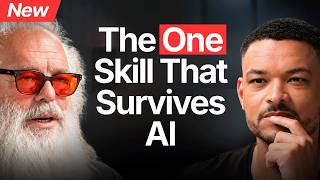
Rick Rubin: The Only Skill That Matters Now Is The One Thing AI Can Never Steal!
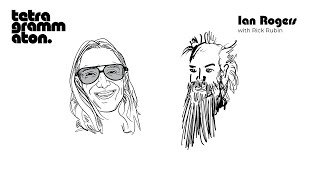
Rick Rubin: Vibe Coding is the Punk Rock of Software (a16z)
Cite This Interview
Use this interview in your research, article, or academic work
Related Interviews

John Endresa
CEO at South African Institute of Race Relations
In this interview, John Endres of the Institute of Race Relations discusses South Africa's future through the lens of data, policy, and public opinion. He…

Ali Ghodsi
Co-Founder & CEO at Databricks
In this interview, Ali Ghodsi, co-founder and CEO of Databricks, shares the unlikely story of how a reluctant professor became one of Silicon Valley's most…

Kevin Paffrath
Founder & CEO at Meet Kevin (Reinvest)
In this interview, Kevin Paffrath — financial analyst and creator behind the Meet Kevin brand — breaks down Alex Karp's controversial claim that OpenAI and…
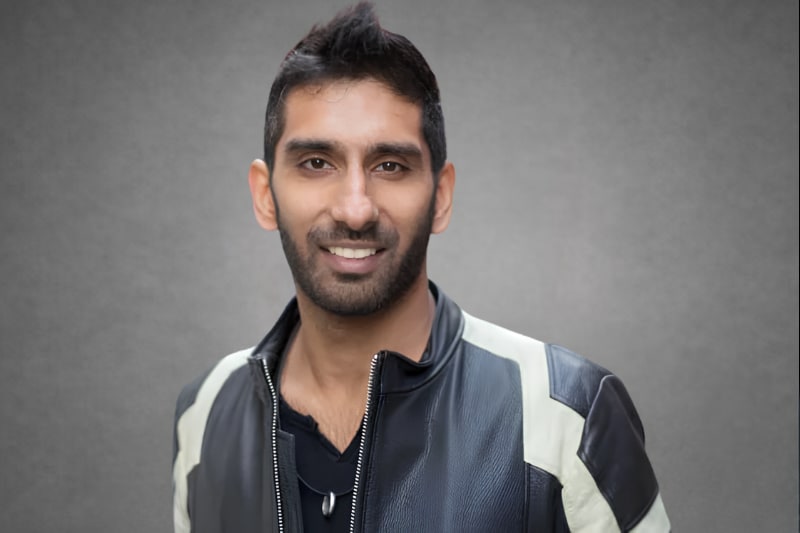
Rahul Vohra
Founder & CEO at Superhuman
In this interview, Rahul Vohra, founder and CEO of Superhuman, unpacks how to build, scale, and sell a startup with clarity and precision. He shares…
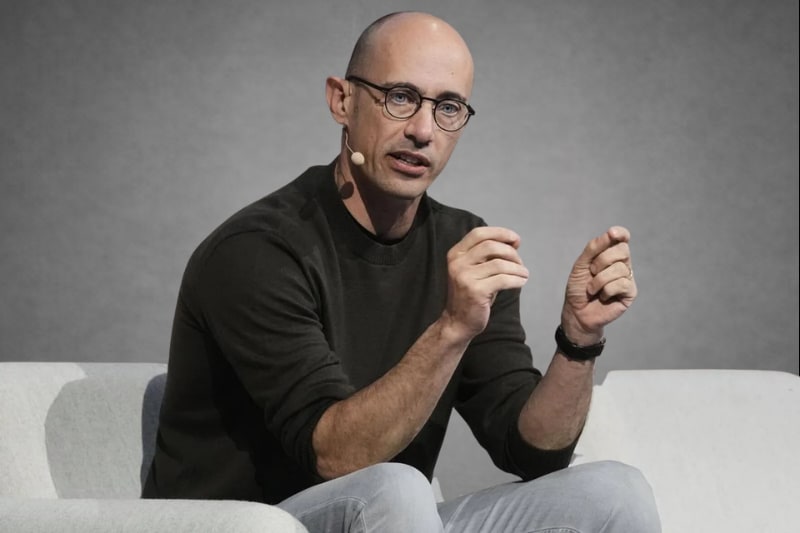
Tobi Lütke
Founder & CEO at Shopify
In this interview, Tobi Lütke, founder and CEO of Shopify, shares how AI agents and a company-wide culture shift are reshaping the future of work.…
Tarun Mehta
Co-Founder & CEO at Ather Energy
In this interview, Ather Energy co-founder and CEO Tarun Mehta reflects on building India's premier electric two-wheeler enterprise from an experimental college project into a…