

Drew DesbordesFounder & CEO
In this interview, comedian and content creator Druski opens up about growing up in a volatile household in Gwinnett County, Georgia, how he used humor as a survival tool for his family, dropping out of college to pursue comedy with no safety net, and the years of invisible grind before a Drake co-sign changed everything. He breaks down the truth about overnight success, the courage required to bet on yourself when every major platform says no, and his relentless pursuit of generational comedic legacy.
Founder Stats
- Creators
- Started 2019
- Not Publicly Disclosed/mo
- 15+ team
- Atlanta, Georgia, USA
About Drew Desbordes
Drew Desbordes, known widely as Druski, is the founder and creative force behind 4Lifers Entertainment, his Atlanta-based production company. A Gwinnett County native who dropped out of Georgia Southern University to pursue comedy full-time, Druski rose to mainstream prominence after appearing in Drake's Laugh Now Cry Later music video in 2020. Since then, he has headlined comedy tours, hosted the BET Awards, starred in Super Bowl campaigns for Dunkin Donuts and T-Mobile, and is set to appear alongside Emma Stone and Chris Pine in The Catch, releasing in 2027. His self-funded YouTube universe, which includes the satirical Coulda Been Auditions franchise, has established him as one of the defining comedic voices of his generation.
Interview
September 30, 2026
What is it that most people do not know about your earliest context that is most informative to who you are today?
I still literally feel like that little boy in all these pictures. I see these moments and it reminds me of how free I was able to be as a kid. My mom and my grandparents always supported me being open and free. My dad was different. He was old school and very physical in his teaching. At eight or nine years old he was telling me my three options were find a trade, go to jail, or go to the military and get my ass blown off. Those were it. And I'm like what the hell. But as life went on, every single lesson he taught me eventually came back and started to make sense. I have come to deeply appreciate those lessons, even though the delivery method was too far at times.
Was comedy a tool for you as a young child or was it something more organic than that?
Very much so a tool. My comedy comes from that place of wanting to heal, wanting to make our situation better at home. I would always try to step in after these moments, after arguments, after things went too far, to be the funny guy the next day, to lift everybody's vibe up. One time I watched my brother get beat for wetting the bed and it was far, very far from a normal punishment. And I would try to be the coping mechanism for him in those moments, maybe at dinner after, maybe the day after, just trying to bring light into a dark situation. That shaped what kind of comedian I became. I never punch down. I always find the funny from a good-hearted place.
Your brother was diagnosed with schizophrenia and bipolar disorder. Do you believe the same early environment produced very different outcomes for you both?
One hundred percent. I feel like I might have found a coping mechanism with comedy that he never found. Trauma can give you the good route or the negative route. And I feel like a lot of what was going on in our house early on played a role in him being diagnosed. I would always try to make him laugh because I knew we were in a messed-up situation. You could either go dark with that stuff or you could find something to channel it through. For me it was comedy. For him it went a different direction. That is the sad side of the story but it is the truth.
How did hypervigilance show up practically in your daily awareness and how does it affect your comedy?
I can read a room and sense any type of danger, any type of happiness, any type of sadness, all of it. Somebody could be mentally ill, physically hurt, anything, and I pick up on it immediately. I have always been a good judge of character and that has helped in my career enormously. In this interview itself I stopped mid-sentence and said you look like you have something to say there because I could see it in your face. People do not usually do that. It is that same radar that makes me good at observing human behavior and turning it into content. But it always comes at a cost. It costs you something to always be that switched on.
How has your childhood shaped your relationship with romantic partners as an adult?
I get scared when I get too close. I feel like I almost continuously pull back once things get serious. It is almost like a magnet when you flip it the wrong way. The closer someone gets, the more it repels. I think part of it is that I have not seen a healthy, successful relationship modeled with my own two eyes growing up. So I do not know what that looks like. And the more successful I have become, there is this additional doubt of whether someone loves the superstar of me or loves Drew. When you see how fans react to you at a show or a meet and greet, you start to wonder if the person you are dating is genuine the way those fans are being genuine. You want them to love the real you, the one who was broke on the sofa at his mom's house. That is a real question for me that I still have not fully answered.
What happened in that college dorm room that changed the trajectory of your life?
I stopped going to classes altogether. Just stayed in my room for the whole second semester, sat there and thought about what I actually wanted to do in life. I was there for sports journalism to maybe get my face on ESPN, but did I actually want that? I would watch Steve Harvey videos and Kevin Hart interviews on YouTube for hours. And I started to notice that every single person I looked up to was a comedic legend. I felt more connected to them than anything I had ever felt in my life. It clicked. I have always been the funny guy in every classroom, in every sport, got kicked off the football team for being funny. That is my purpose. I was sitting in college not even knowing that was a legitimate career I could pursue. That was my epiphany.
You dropped out and went home. How did you tell your mom and what happened when you did?
She cried and hung up on me. I could not even get a rebuttal in. She just cried on FaceTime and hung up. My friend came and drove four hours to pick me up in the middle of the night. When I got home she let me in and I told her my full plan. I said I am going to be a comedian. I am going to be on TV. Give me a year. If I am not on TV in a year, I told her something wild about what I would do. That is how badly I believed in it. She thought I was being dramatic. My grandparents thought I was going to be a crackhead. Everybody thought this was the dumbest decision I could possibly make.
You said when you left college you briefly fell into illegal activity. What happened?
I tried legitimate jobs. Red Lobster, Longhorn, Outback, McDonald's. And living in Atlanta I fell victim to the scamming circle that exists there. Card scams, bank stuff, things like that. I was never a bad guy. I just thought I could do that on the side while pursuing comedy. But I was really just flirting with comedy, not actually doing it. The karma of it weighed on me constantly. And then we got arm robbed. There was a gun to my head and I had this out-of-body moment of how did I end up here? That was the last moment. I said to myself if I survive this I am going to become a comedian or die trying. Full stop.
What happened right after you made that commitment and wrote your goals down?
Everything fell apart immediately. My car got repossessed the same week. No mattress. Laying on my sister's blanket on the floor. No dresser. Nothing. Most people quit at that moment. They pray for something, they commit to it, God starts removing things from their life as part of the trial, and they take that as a sign it is not working. I looked at it the opposite way. I filmed my car getting repossessed and posted it. I thought what else could I possibly lose. My back is fully against the wall. I feared nothing because I had nothing left. So I just kept going. Boom boom boom boom boom. I used my mom's house as a movie set. I flipped the couch, set up surveillance camera angles, acted as the news reporter in the backyard using the trash can as a tripod. I kept building.
How did the Drake co-sign change your trajectory?
Everything shifted. It was not even about the money from that specific video. It was how brands started to see me after. Before that I was another internet personality getting sent free merch. After Laugh Now Cry Later, I was a star. Transactional conversations began. T-Mobile, Nike conversations, real money. And I was alongside Drake, Lil Durk, Marshawn Lynch, Kevin Durant, Odell Beckham. That changed the perception of me completely. I can never repay him for taking that chance on me when what I was doing was still minimal compared to what I do now. But I would never look back and say I was lucky. I had put years of work in that nobody saw. He noticed because I had not stopped.
You were rejected by Netflix, Amazon, and FX multiple times. How did you respond?
I stopped knocking on the same door and built my own door. I took money I had been earning from brand deals and instead of buying jewelry or a new house, I invested it into producing my own content. Coulda Been Auditions, Could Have Been Love, Could Have Been House, Could Have Been Daddy, all of it. Millions of dollars of my own money into my own creative vision. Nobody gave me that. And then the same platforms that said no started to come back wanting to buy those same shows or co-produce new ones. Now it is a bidding war. The lesson is simple. Before anybody sees your vision, you have to see it. If you do not see it first, you are doing yourself a disservice.
What is your framework for deciding what to say on camera versus what stays off camera given your brand deals?
I have never punched down. You can go through everything I have ever posted and find me something where I am punching down or coming from a mean-spirited place. It does not exist. I come from a good-hearted space with every single thing I put out. I am not a political guy. I do not touch on race wars or political movements. I just find the funny in things that are happening in real life that people see every day but do not consciously notice. A great comedic actor can bring something back to life that has been in the back of your brain for 15 years and make it suddenly hilarious. That is what I try to do. And brands feel safe with that because I never attack anyone. I just observe the world.
The conservative white women skit reportedly got hundreds of millions of views and triggered a reaction from the highest political office. How do you think about that?
I still do not know if it was directed at me. People sent me that video and I just left it alone. Even in a weird way I try not to read into it. I am not looking to get sued by anybody. We have too much to pursue right now. But I think it speaks to the fact that if both sides of anything ever get upset with you, it usually means you are not on either side. You are just finding the funny wherever it exists. And I truly do not take sides. I have sat with Michelle Obama, JD Vance, Ivanka Trump, Kamala Harris. I will sit with everyone and just ask what I am genuinely curious about. That is all I know how to do.
What do you believe is the actual difference between people who make it and people who do not in a field like comedy where the odds are almost impossible?
Most people do not actually want to be great. They say it because it sounds good. I would be around people who said let us all do it together, let us wake up every morning and grind, and then they stop showing up by day two or three. Nobody shows up continuously for the real work. Nobody is obsessing every single day and night, having dreams about it, sitting in the edit for 18 hours looking at clips. When I noticed there is a tiny group of people actually doing the work versus a massive group of people just talking about it, I knew I was in my own lane. Everybody wants to be number one but nobody actually wants to do the work. You also have to be very specific about what you take on. Quick money dilutes the brand before it has a chance to start. I turned down easy music video money all the time because the artist did not fit the image I was building. That kind of discipline is rare.
What does greatness actually mean to you and how will you know when you have achieved it?
Greatness does not have a money value or a touring number attached to it. It is about how far you are willing to set the bar. Eddie Murphy set it here. Kevin Hart is damn near where Eddie is. Kobe, Jordan, LeBron, each generation somebody pushes it forward. I want to be in that conversation when everything is said and done. I want to be remembered as the face of comedy for my generation for the next 30 years the way Eddie did it or the way Kevin has done it. The run. Not one moment, not one era. The whole run. And it starts with the next five years of showing everyone that I am not just the social media guy. I am the superstar. The evolution is happening right now.
If you could go back and say one thing to yourself in that dorm room at Georgia Southern, what would it be?
Believe in yourself more than you have ever believed in anything in your entire life. You are one of one. And stay consistent even when the road looks rough and you cannot see the end of the tunnel because that is the exact moment most people quit. Your car is about to get repossessed. Things are going to fall apart right when you commit. God starts removing things from your life as soon as you ask for what you want, and most people read that as a sign to quit. Do not. Those removals are the trial. You have to get through the trial. Nobody grows to do great things without looking back and closing the door on their past. Close it. Forgive everything. Keep going.
You are on set for The Catch with Emma Stone and Chris Pine, hosting BET, shooting Collect and Praise, and building your YouTube universe all at once. Do you ever slow down and take any of this in?
Almost never. The day after the BET Awards I was on a plane to shoot Collect and Praise. The last day of that shoot, everyone was celebrating, and I was already on a plane to shoot The Catch. I do not feel these moments the way other people expect me to. I am always looking for the next thing. My mom did that to me. I would come home with a B and she would say you could have done better. I would say I got an A and she would say why not an A plus. Both my parents were that way. There is no correct answer in my household because there are always multiple routes to every answer. That is why in my comedy I am never just funny in one way. I can be funny in a sketch, a movie, a live show, a commercial, a TV show, a Super Bowl ad. I will not stop at one way. There is always another route to getting there.
Table Of Questions
Video Interviews with Drew Desbordes
Druski: This Viral Skit Got Trump's Attention, And He Told Erika Kirk To Sue!
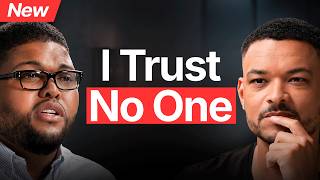
Druski: This Viral Skit Got Trump's Attention, And He Told Erika Kirk To Sue!
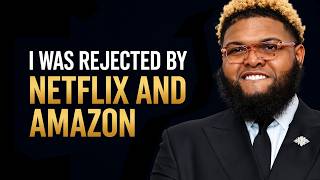
Druski: They're Lying To You About Overnight Success!
Cite This Interview
Use this interview in your research, article, or academic work
Related Interviews

Rick Rubin
Co-Founder & Music Producer at American Recordings
In this interview, legendary music producer and author Rick Rubin shares his philosophy on creativity, artistic fearlessness, and what it truly means to make great…

John Endresa
CEO at South African Institute of Race Relations
In this interview, John Endres of the Institute of Race Relations discusses South Africa's future through the lens of data, policy, and public opinion. He…

Noah Shinn
Founder & CEO at Instinct
In this interview, Noah Shinn, founder and CEO of Instinct, breaks down what a personal AI agent actually means in practice, how the product is…

Vineet Nayar
Former CEO at HCL Technologies
In this interview, Vineet Nayar, former CEO of HCL Technologies, challenges conventional ideas about managing people, the role of Indian IT in the AI era,…

Diogo Almeida
Co-Founder & CEO at TypeSafe AI
In this interview, Diogo Almeida, co-founder and CEO of TypeSafe AI, breaks down why the industry has been building the wrong kind of AI for…

Anton Oika
Co-Founder & CEO at Lovable
In this interview, Anton Osika, co-founder and CEO of Lovable, explains why the era of vibe coding is over and the era of serious AI-powered…