
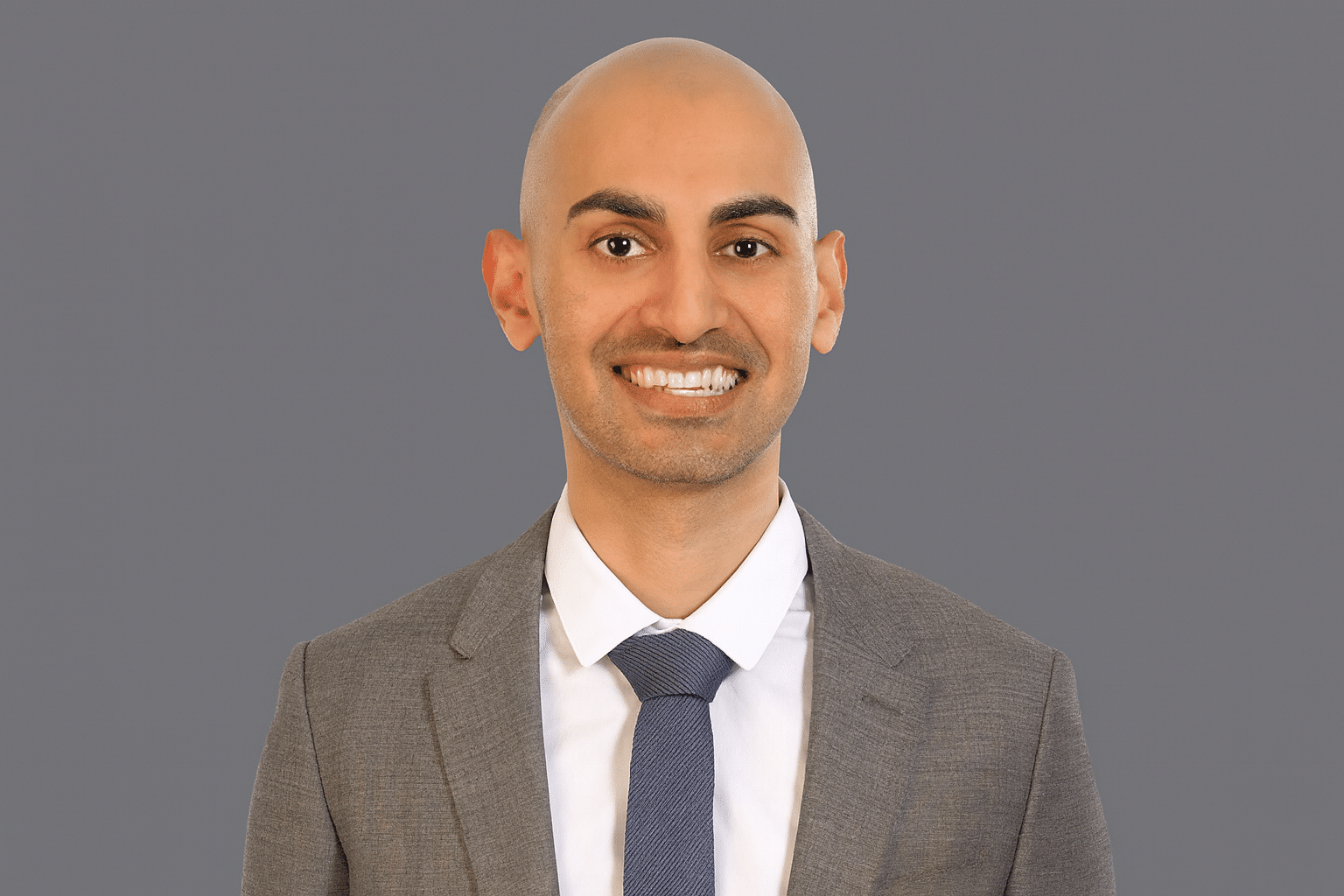
Neil PatelCo-founder, NP Digital
In this interview, Neil Patel discusses why he believes artificial intelligence represents one of the biggest entrepreneurial opportunities of the decade. He shares how founders can identify practical AI applications, build focused businesses with lean teams, and adapt to a world increasingly shaped by automation and intelligent agents. Patel also explains the importance of execution, simplicity, and staying close to customer needs as technology rapidly transforms digital marketing and business growth.

Founder Stats
- AI, Marketing, Agencies
- Started 2015 or
- $1M+/mo
- 50+ team
- USA
About Neil Patel
Neil Patel is a serial entrepreneur, digital marketing expert, and co-founder of NP Digital, a global marketing agency serving brands across multiple industries. Widely recognized for his contributions to SEO, content marketing, and growth strategy, he has helped businesses scale through data-driven marketing and innovation. Today, he is focused on how artificial intelligence is reshaping entrepreneurship, marketing, and the future of business operations.
Interview
December 13, 2025
Why do you call what is happening right now the 'AI gold rush'?
Every decade or so there is a big shift. For me, AI feels like that kind of shift. You see tiny teams building companies worth hundreds of millions or even billions. Tools are getting better fast, costs are dropping, and real demand is there. When you put all that together, it feels like a gold rush moment for builders.
You said 'the death of Google and smartphones has arrived.' What did you really mean by that?
I do not mean Google disappears. I mean the old version of Google is dying. Before, you typed, clicked ten blue links, and did your own research. Now Google is using AI overviews and AI mode. It runs many searches for you, gives a direct answer, and will show up in glasses, cars, and other devices, not just phones.
How do you see company structures changing because of AI?
Right now most companies look like a pyramid. CEO at the top, a few layers of management, and a huge base of employees doing simple, repeatable work. I think it shifts to more of a diamond. You still have leadership and strong managers, but the base gets much smaller because AI can handle many of the boring, low-level tasks.
Why do you believe fighting technology is the wrong way to live and work?
Every time there is a big technology shift, some people lean in and others fight it. The people who lean in usually get the upside. I have never felt that going against technology helps you in the long run. You may slow change for yourself, but you cannot stop it. I prefer to adapt and figure out where the opportunity is.
You say the winning formula is 'humans plus AI.' What does that look like in practice?
Most people look at AI as either a threat or a magic button. I see it as a force multiplier. Humans bring judgment, taste, and context. AI brings speed, pattern recognition, and scale. The people who win in this era are not pure tech or pure human. They are the ones who combine both and keep experimenting with new tools.
You rode the SEO wave early. How did that shape how you see the AI wave now?
With Google and SEO, I saw a simple pattern. People searched, then changed something or bought something. That traffic was going to grow. I went all in on that wave and it built my agency. With AI I see something similar, but it is more about impressions, recommendations, and intent. You may get less traffic, but it converts way higher.
You talk a lot about 'edge' and picking a niche. How should founders think about that?
Your edge is what you are naturally better at. For me it was marketing. If you try to win in a space where you have no edge, the game gets harder. I tell people to start where they already understand the customer or the problem. Pick a niche you can actually sell into, then expand out once you get traction.
What is your process for choosing a first target market for a new business?
I do not start with a big market report. I start with revenue. Where can I close deals the fastest based on who I know and what I am good at? Maybe it is lawyers because you went to school with some. Maybe it is DTC brands because your friends run stores. Your first target market should be the easiest one to sell.
Why do you push so hard for new founders to focus on revenue first?
Revenue solves a lot of problems. I see people spend months building decks, logos, and complex plans. Then three months later they still have zero dollars coming in. At some point they need a job. If you focus on closing revenue first, even small deals, you keep the business alive, learn from real customers, and earn the right to think bigger.
You say people should chase simple, realistic, high-demand AI ideas. Why?
Many people hear AI and think, 'I need to build the next ChatGPT.'' That is a very expensive, hard game. I prefer ideas where demand already exists and you can deliver with a small team. For example, helping companies integrate AI, build content, or launch agents. These are not sexy research projects, but they can be seven or eight figure businesses.
Can you explain the AI agent builder agency opportunity in simple terms?
Everyone in big companies talks about AI agents. Very few people know how to set them up. An AI agent builder agency is simple. You sit with a company, find repetitive workflows, then use tools like Crew or AgentForce to build agents that handle those tasks. You charge to design, set up, and maintain them. They save money, you make money.
What real business value do AI agents create for companies?
Think about what a company spends on boring tasks: support tickets, data entry, simple research, routing work. That can add up to hundreds of thousands or millions a year. If you build an agent that costs maybe a thousand dollars a month and it replaces a big chunk of that spend, they are very happy. It is pure efficiency with similar output.
What is an AI content agency and why does 100 percent AI content fail?
An AI content agency uses AI for the heavy lifting and humans for the magic. AI can research, outline, draft, and generate images fast. Humans refine the story, add real experience, and make it unique. Pure AI content usually feels generic and often does not last in search or social. The winning model is AI for speed and humans for depth.
You mentioned Generative Engine Optimization, or GEO. What is it and why does it matter?
GEO is about ranking inside AI experiences. When someone asks ChatGPT, Perplexity, or Google’s AI mode a question, those systems often recommend products or brands. That is a new kind of 'search result.'' GEO is the work of getting your brand mentioned and recommended in those answers through content, brand mentions, comparisons, and structured data so you show up more often.
How big do you think these AI business opportunities really are?
If you want a lifestyle business, these ideas can easily get you to a few million a year. If you are more aggressive, they can become eight figure companies and beyond. The market is huge because every business needs to adapt. The real limit is not the market. It is how far you are willing to go in sales and execution.
Right after someone finishes this interview, what is the first step you want them to take?
Looking ten years ahead, what excites you most about this AI wave?
The most exciting part is how integrated AI will be. It will be in your car, your glasses, your home, and your tools at work. That means more people will have leverage that only big companies had before. If you are a doer and willing to adapt, it becomes easier than ever to build the business and life you want.
Table Of Questions
Video Interviews with Neil Patel
Neil Patel - The AI Millionaire: How To ACTUALLY Make Your First $1M During The AI Gold Rush (Painfully Simple!)
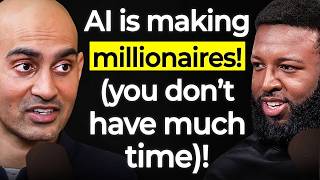
Neil Patel - The AI Millionaire: How To ACTUALLY Make Your First $1M During The AI Gold Rush (Painfully Simple!)

Why YouTube Is the Best Place to Find Customers Right Now

The YouTube Update That Changes Everything
Cite This Interview
Use this interview in your research, article, or academic work
Related Interviews

Naveen Rao
VP of Generative AI & Former CEO of MosaicML at Databricks
In this interview, Naveen Rao, VP of Generative AI at Databricks and former CEO of MosaicML, analyzes the explosive economics of artificial intelligence inference and…
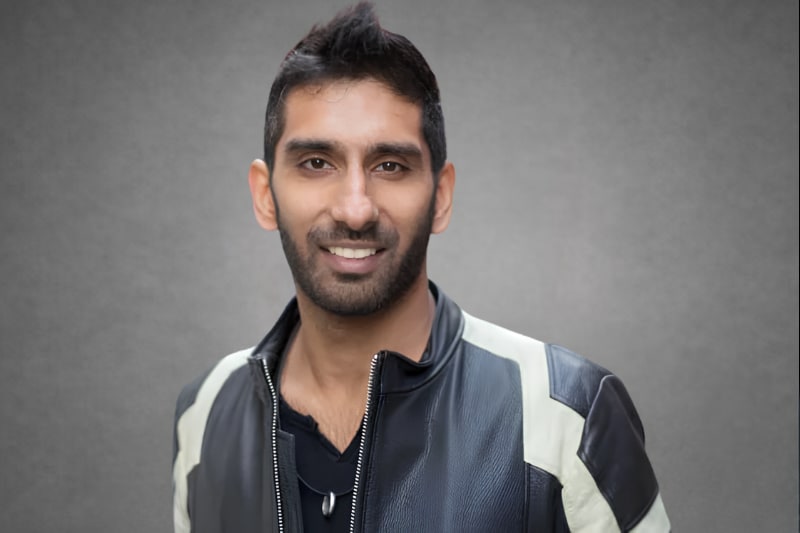
Rahul Vohra
Founder & CEO at Superhuman
In this interview, Rahul Vohra, Founder and CEO of Superhuman, explores why superficial AI integrations fail to retain software users and outlines frameworks for embedding…

Sam Altman
Co-founder & CEO at OpenAI
In this interview, Sam Altman, Co-Founder and CEO of OpenAI, explores the practical trajectory toward artificial general intelligence and the imperative of human agency in…
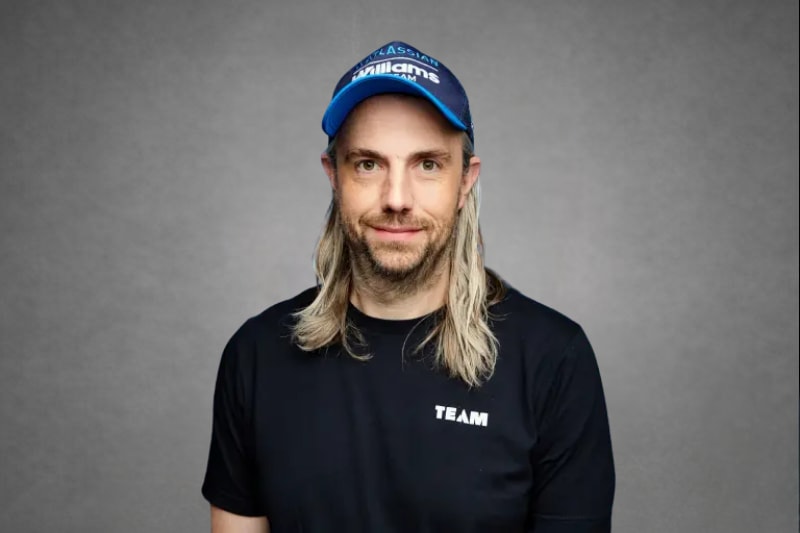
Mike Cannon-Brookes
Co-Founder & CEO at Atlassian
In this interview, Mike Cannon-Brookes, Co-Founder and CEO of Atlassian, discusses the practical integration of autonomous AI agents across modern enterprise collaborative workflows. He examines…

Jensen Huang
Co-founder & CEO at NVIDIA
In this interview, Jensen Huang, Founder, President and CEO of NVIDIA, addresses prevailing existential narratives surrounding artificial intelligence and outlines Europe's sovereign computing opportunities. He…

Aneel Bhusri
Co-Founder & CEO at Workday
In this interview, Aneel Bhusri, Co-Founder and CEO of Workday, unpacks the seismic impact of enterprise AI agents on global corporate labor and organizational architecture.…