

Caleb RalstonFounder & CEO
In this interview, Ralston founder and CEO Caleb Ralston shares the blueprint for building and scaling a personal brand to drive business results. Ralston discusses the importance of optimizing for trust rather than virality, details the brand journey framework, and explains the mechanics of contrarian takes. He also reflects on his early career working with Gary Vaynerchuk and the Hormozis, managing burnout, and learning to stack non-niche interests for differentiation.

Founder Stats
- Marketing
- Started 2024
- Not Publicly Disclosed/mo
- 1–5 team
- Bellingham, Washington, United States
About Caleb Ralston
Caleb Ralston is the founder and CEO of Ralston, a consulting firm specializing in personal branding and content strategy launched in 2024. Ralston began his career creating media content in the fitness industry and later worked as a video producer at PureWow. He gained industry prominence as a lead media strategist, managing the personal brands of Gary Vaynerchuk and Alex and Leila Hormozi. Today, he helps founders build in-house media machines and scale their audience trust.
Interview
August 10, 2026
What is the biggest lie about building a personal brand online today?
The biggest lie is that all views or all attention is good attention. In a world where the industry is obsessed with going viral, people end up building audiences they cannot transact on. You can have millions of followers and make zero money, or you can have a highly targeted audience and build a massive business.
How can a personal brand generate millions of dollars with less than ten thousand followers?
You generate revenue by reaching the exact demographic and customer base you are trying to serve. If your audience consists of the right decision-makers, you do not need millions of casual views. A small, high-trust audience of qualified buyers is far more valuable than a viral, untargeted following.
What is the cat analogy from Alice in Wonderland, and how does it relate to consistency?
In Alice in Wonderland, Alice asks the Cheshire Cat which way she should go. The cat asks where she wants to end up, and Alice says she does not know. The cat responds that if you do not know where you are going, any path will take you there. Consistency without a clear destination can actually hurt your brand.
Why is optimizing for virality rather than sales a mistake for business owners?
Optimizing for virality forces you to adopt behaviors that do not lead to sales. You end up posting random trends or lifestyle content that confuses your target demographic. Instead of focusing on getting broad attention, you should focus on delivering value and building trust with your ideal customers.
How do you define a good brand, and what role do associations play in it?
A good brand is when your target audience automatically associates your name with the specific thing you want to be known for. Branding is the intentional pairing of relevant things done consistently. By pairing yourself with specific topics, people, and values, you shape how the market views you.
Why are negative associations often more impactful than positive ones?
Negative associations stick to your reputation and are harder to clean up than positive ones are to build. If you associate with questionable characters or post tone-deaf content, your audience will lump you into that group. You must actively decide what associations you want to avoid to protect your trust.
What is the brand journey framework, and what are its four key questions?
The framework reverse-engineers your desired business outcomes. The four questions are: what selfish outcome do you want to happen as a consequence of your brand, what do you need to be known for to make it happen, what actions do you need to do to build that reputation, and what skills do you need to learn today.
How should a founder handle having multiple different goals in the brand journey framework?
What is the two column approach to identifying contrarian takes?
Draw a line down a page. On the left side, list everything said in your industry that you disagree with. On the right side, write down what you actually believe or do differently. These are your contrarian takes. Sharing these takes separates you from competitors who are just repeating generic advice.
How do you build a credibility bank when you are a student rather than an expert?
What is interest stacking, and how does it prevent a personal brand from being copied?
Interest stacking is sharing unique, non-niche interests outside of your core business expertise. By sharing personal passions, like riding motorcycles or a specific hobby, you give the audience unique ways to connect with you. This creates a highly personal brand combination that cannot be replicated by competitors.
What is the equation you use to help people generate content ideas?
The equation is: your ideal customer's painful problem plus your unique solution equals a content idea. You identify the most costly problems in terms of time, money, or reputation that your customers face, pair it with your way of solving it, and attack it from multiple different angles to create content.
Why do you recommend that solo creators limit themselves to two platforms?
Trying to post on every platform immediately leads to burnout and poor quality. I advise solo creators to pick one primary and one secondary platform to start. If you have a team, you can expand to three primary and three secondary platforms. Focus on establishing consistency on a manageable scale first.
How does the accordion method help creators balance quality and quantity?
The accordion method alternates between high volume and high focus. In the beginning, you expand the accordion to publish more content and quickly collect audience data. Once you identify what topics and formats resonate, you contract the accordion to focus your energy on producing higher quality versions of those winners.
Why did you decide to work at PureWow rather than directly on team Gary Vee?
Working directly on Gary's team was the obvious choice, but it was close to what I already knew. I chose PureWow because women's lifestyle publishing was completely foreign to me. I wanted to force myself to learn a new domain and acquire unique skills that would make me a more well-rounded media strategist.
How did the Caleb can do it attitude lead to your position on Gary Vaynerchuk's team?
I built a reputation inside the company by taking on hard projects with zero instructions and delivering results. I worked outside of normal hours and handled executive requests on weekends. By establishing that Caleb can do it, the leadership team noticed and recommended me to join Gary's personal team.
What did working closely with Gary Vee teach you about audience relationships and empathy?
It taught me to put the audience first in everything we do, even when it is highly inconvenient. It also taught me that empathy is a business superpower rather than a weakness. Being empathetic and understanding your customer's perspective is the ultimate way to build a durable, trust-based brand.
Table Of Questions
Video Interviews with Caleb Ralston
The Content Strategist Who Turns Founder Brands Into MILLIONS

The Content Strategist Who Turns Founder Brands Into MILLIONS
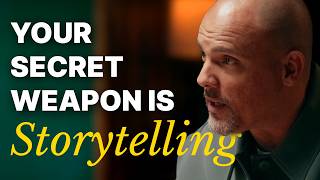
Viral Content Expert: Give Me 90 Minutes And You'll Never Struggle To Sell Again

The Formula Behind Brands That EXPLODE

How to RESTART Your Personal Brand (Full Course)
Cite This Interview
Use this interview in your research, article, or academic work
Related Interviews
George Hawwa
Growth Director & Founder at Attention Experts
George Hawwa is the Founder and Managing Director of Attention Experts, a leading digital marketing agency. He specializes in social media advertising, audience targeting, and…

Rory Sutherland
Vice Chairman at Ogilvy UK
n this interview, Rory Sutherland shares his views on AI, marketing, business incentives, innovation, and decision-making. He explains why companies often focus too much on…

Raúl Vallecillo
General Manager and CEO at Panini Latin America
In this interview, Raúl Vallecillo discusses the enduring appeal of Panini’s FIFA World Cup 2026 sticker album and the global collecting culture that surrounds it.…
Morgan DeBaun
Founder at Blavity
Morgan DeBaun shares how she built Blavity from a newsletter created in response to the Ferguson protests into a multi-brand media and events company. She…

Alex Karp
Co-Founder & CEO at Palantir Technologies
In this interview, Alex Karp, co-founder and CEO of Palantir Technologies, argues that major AI labs are quietly steering toward government nationalization to escape unlimited…

Ali Ghodsi
Co-Founder & CEO at Databricks
In this interview, Ali Ghodsi, co-founder and CEO of Databricks, shares the unlikely story of how a reluctant professor became one of Silicon Valley's most…