
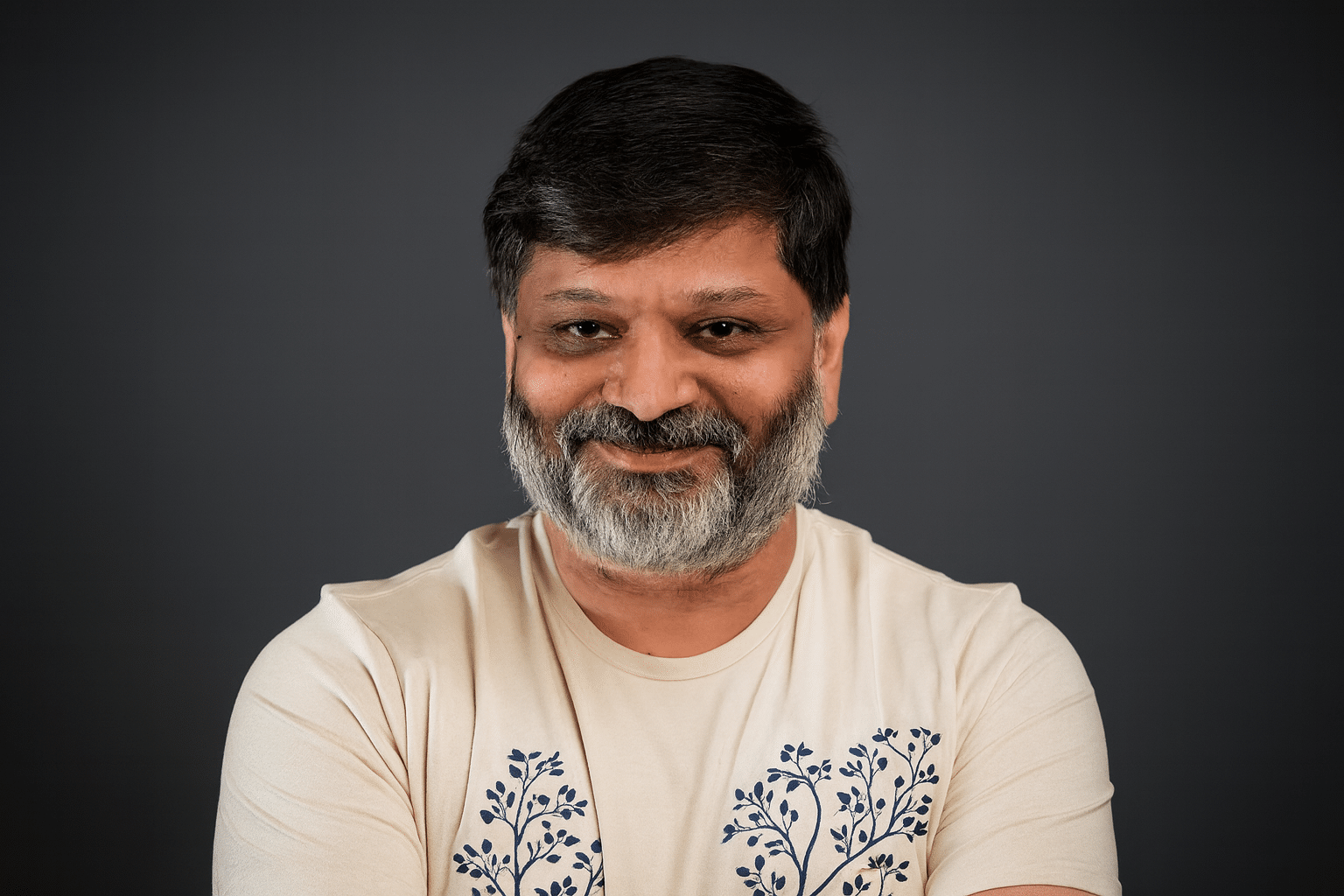
Dharmesh ShahCo-founder & CTO, HubSpot
In this interview, Dharmesh Shah discusses the evolution of digital marketing from SEO to answer engine optimization and the growing role of AI agents in business. He shares how HubSpot scaled into a leading SaaS platform through long-term thinking, product focus, and customer-centric innovation. Shah also explains why builders should embrace experimentation, leverage emerging technologies early, and maintain a curious, hands-on mindset regardless of company size.

Founder Stats
- SaaS, Marketing, AI, Technology
- Started 2015 or
- $1M+/mo
- 50+ team
- USA
About Dharmesh Shah
Dharmesh Shah is the co-founder and CTO of HubSpot, a leading customer relationship management and marketing software company. He helped pioneer the inbound marketing movement and played a central role in scaling HubSpot into a multibillion-dollar SaaS business. Beyond his executive responsibilities, Shah is known for his passion for software development, entrepreneurship, and emerging technologies, with a particular focus on AI, automation, and building products that solve real customer problems.
Interview
December 9, 2025
In the early days, how did you get HubSpot moving when you had no money or connections?
Why did blogging and SEO beat well-funded companies with CMOs and big ad budgets?
Those companies were spending on things that did not really move the needle. I was just at home writing useful content and learning how Google worked. If you consistently publish pages that deserve to rank, and you structure them well, you slowly win. It looked like magic, but it was just focus and repetition.
How do you explain the shift from classic SEO to what you call AEO?
SEO was about ranking in Google’s ten blue links. Now people ask ChatGPT or other AI tools and get an answer, not a list. AEO is answer engine optimization. Instead of only thinking about keywords and titles, you think in questions and structured answers so the model can trust and reuse your content inside its replies.
What are a few practical steps a founder can take today to get ready for AEO?
First, let the AI crawlers in. If you are blocking bots, make sure OpenAI’s search bot can see your site. Second, reframe key content as clear question and answer pages. Third, keep doing white-hat SEO so you show up in Bing and others. You are still building authority, just for a new distribution channel.
You often say intensity is the strategy. What do you actually mean by that?
Was your blogging success more about talent or about sheer volume and consistency?
Volume and consistency, for sure. I was not the best writer on the internet. But I wrote all the time. Some days I would publish multiple posts. Over months and years, that adds up. Every post is a small experiment. When you stack hundreds of those experiments, your odds of finding winners go way up.
How should a founder choose what market or problem to work on?
You describe communities as a way to fix inefficient markets. Can you unpack that?
An efficient market is where every valuable transaction that should happen actually happens. Often buyers and sellers do not know each other, or they cannot trust each other, or they cannot price the deal. A good community plugs those gaps. You gather the right weirdos, reduce friction, and then participate in the value that gets unlocked.
What did you learn watching people like MrBeast or Steven Bartlett with "algojacking"?
They did not start with their product. They started with the algorithm and the audience. Then they reshaped the product to fit what the algorithm wants to show to bored humans. Most of us do the reverse. The lesson is simple. Respect distribution. Study what the system rewards, then design your format and hooks around that reality.
How do you stay motivated when the early metrics are terrible and growth is slow?
You need a belief that the universe rewards honest reps. Early on, eight people read my posts, then sometimes five. It is emotionally hard. I tried to detach from the day-to-day numbers and focus on iteration. Make the next article slightly better. Make the site slightly clearer. Over time, those small upgrades compound in surprising ways.
You use ChatGPT mostly through the API. Why did you build your own interface and memory?
I want my notes, chats, and email to be one big, flexible memory layer that I control. If all my history only lives inside one app, I cannot combine it with other models or tools. My own interface lets me search across years of conversations, then pass that context into whichever AI is best for a given job.
What is "vibe coding" and where do you think it actually works?
Vibe coding is using AI to build software more by feeling and conversation than by traditional engineering. It is great for tools you build for yourself, for small internal apps, or for experiments. It is less great if you want to run a huge, long-lived production system. At some point you still need structure and tests.
You own hundreds of domains and run side projects. How do these fit into your main work?
Side projects are my way to explore ideas with low stakes. A domain is a cheap option on a possible future. Sometimes nothing happens. Sometimes a project like Wordle clone money pops up and makes real revenue. More importantly, each project sharpens my instincts and keeps me close to the actual act of building.
You mentioned mathematical induction as a way to think about progress. Can you explain?
Induction says if something is true for step one and true for step n to n plus one, then it is true for all steps. I translate that into: start, then always find a next step. If you can keep making honest, slightly better iterations, the long-term result almost takes care of itself. The hard part is not stopping.
You joked that you live in the Matrix. How does that shape the way you work?
My main window into the world is a couple of screens. People appear as little talking heads. Code, products, and communities are like levels in a game. I treat business as a long game I get to play every day. That mindset removes some fear. You are just learning the game and trying different moves.
Why keep working so hard after HubSpot and other wins made you financially safe?
If money stops you from doing the thing you love, it was never about the craft. I like writing code, building products, and thinking about markets. That is my version of playing pickup basketball. Jordan had “for the love of the game” in his contract. I just gave myself the same clause for building companies.
Looking forward, what are you most excited about for founders and operators?
I think we are still early. AEO will create a new class of experts and agencies. Agents will become real workers inside companies. Tools that manage knowledge, memory, and creativity will be huge. The opportunity is to combine old truths like iteration and intensity with these new capabilities. That mix will create the next generation of winners.
Table Of Questions
Video Interviews with Dharmesh Shah
Agents, Metaprompting and Tech-powered Parenting with HubSpot CTO Dharmesh Shah

Agents, Metaprompting and Tech-powered Parenting with HubSpot CTO Dharmesh Shah
Billionaire Compresses 20 Years of Wisdom Into 75 Minutes - Dharmesh Shah
You To The Power of AI with Dharmesh Shah | INBOUND Keynote
Cite This Interview
Use this interview in your research, article, or academic work
Related Interviews

Sauvik Banerjjee
Group CTO & Chairman of Rezolve India at Rezolve AI
In this interview, Rezolve AI Group CTO and Chairman of Rezolve India Sauvik Banerjjee discusses career acceleration, organizational leadership, and enterprise artificial intelligence architectures. Banerjjee…

Shishir Mehrotra
CEO at Superhuman
In this interview, Superhuman CEO Shishir Mehrotra shares actionable insights on career development and organizational management in the artificial intelligence era. Mehrotra explains how to…

Paul Graham
Co-Founder at Y Combinator
In this interview, Y Combinator co-founder Paul Graham reflects on twenty-one years of startup acceleration and forty-seven YC batches. Graham explores the nature of founder…

Wawira Njiru
Founder & CEO at Food for Education
In this interview, Food for Education founder and CEO Wawira Njiru reflects on her foundational upbringing, family values, and the journey of building Africa's largest…

Simon Baloyi
President & CEO at Sasol
In this interview, Sasol president and CEO Simon Baloyi discusses the operational turnaround of the global integrated chemicals and energy company. Baloyi details cross-functional collaboration…

Franklin Wang
Founder & CEO at Liquid
In this interview, Liquid founder and CEO Franklin Wang discusses the integration of conversational AI with cryptocurrency perpetual futures trading. Wang details how the Co-Invest…